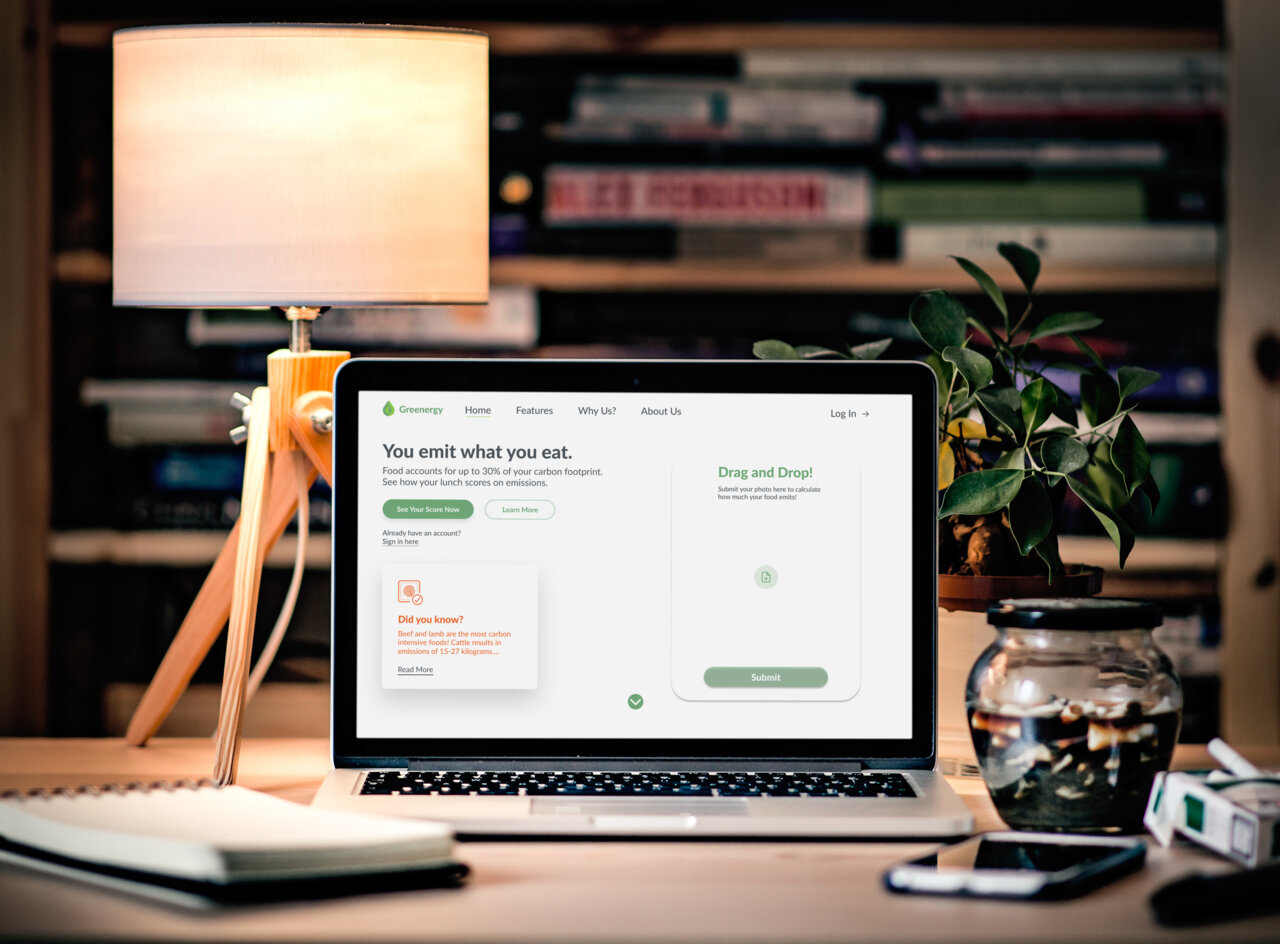
Greenergy
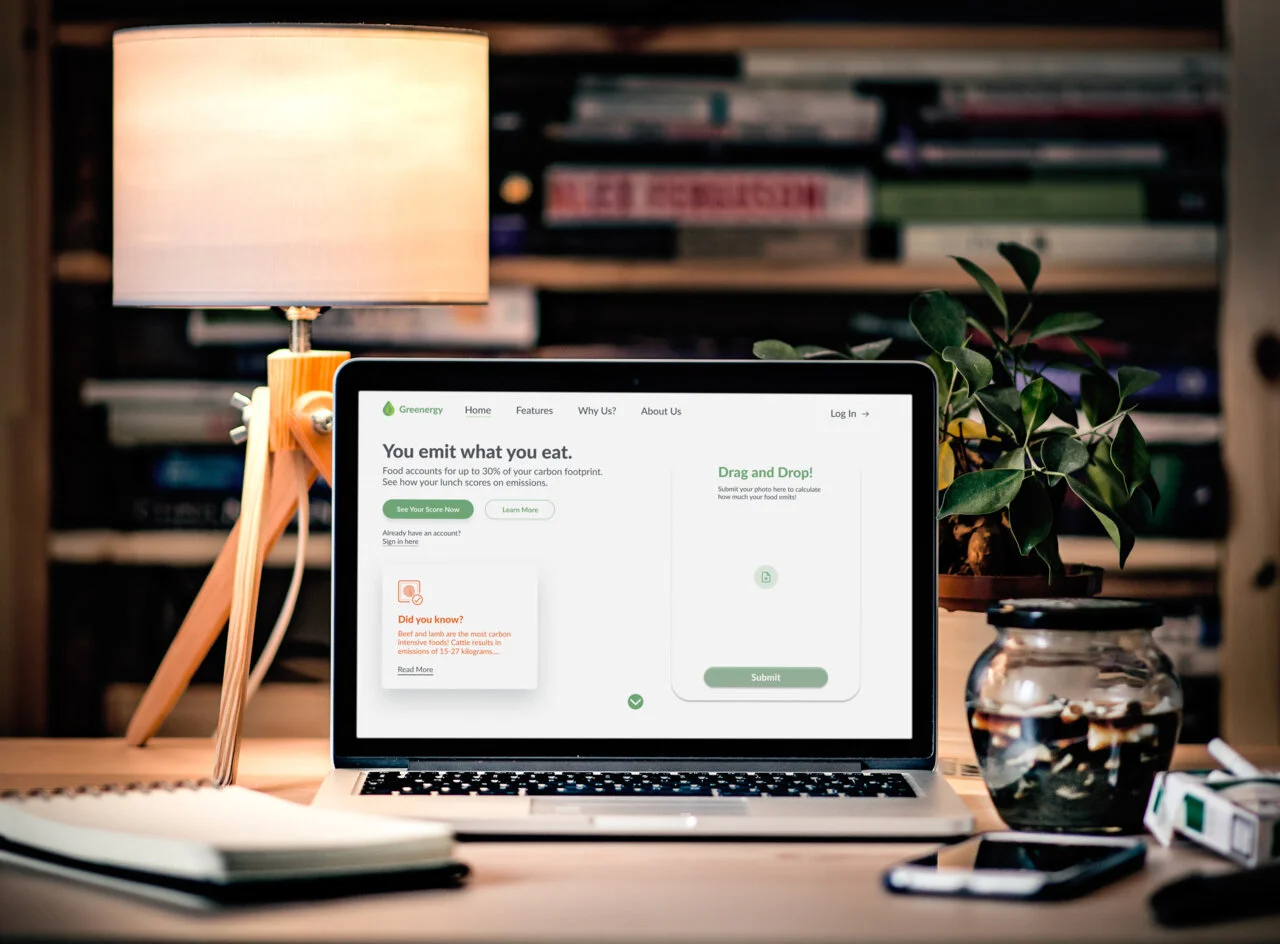
Overview
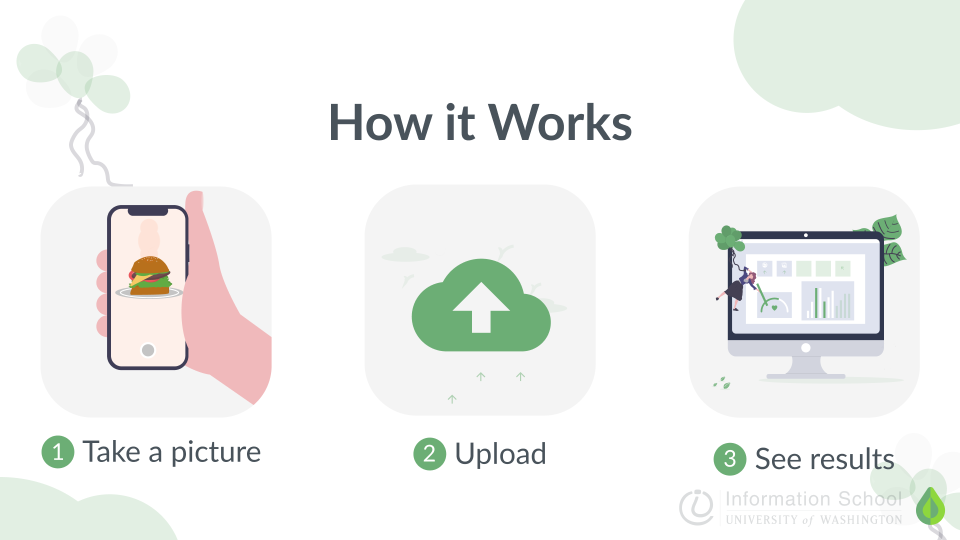
Greenergy is a mobile application designed to help users understand the environmental impact of their food choices. Using image recognition and machine learning, the app identifies food items and instantly visualizes their carbon footprint in a clear, approachable way.
This project was completed as part of the University of Washington Information School capstone, where our team of four (two designers, two developers) was challenged to plan, design, document, and build a solution to a real‑world problem.
Team
Wo Bin Chen, Calvin Chen, Ray Zhang, Rio Ishii
Duration
January 2020 - June 2020
Role
Product Designer, Project Manager
My Role
Design Responsibilities
Designed and prototyped the landing page and dashboard
Created user flows and interaction patterns for the carbon‑impact visualization
Research and ideation sessions to define user needs and opportunities
Iterated on designs based on developer feedback and usability insights
Project Management Responsibilities
Planned and maintained an Agile project schedule
Organized sprints, assigned tasks, and tracked progress
Facilitated communication between designers and developers
Ensured deliverables were completed on time and met capstone requirements
Constraints
We worked with a limited food database of ~100 items due to the complexity of sourcing and training machine‑learning data. This required us to prioritize common U.S. foods (e.g., hamburgers, steak, eggs) and design a system flexible enough to scale in the future.
Problem Statement
Most people want to make environmentally conscious choices, but carbon footprint data is difficult to understand and rarely accessible at the moment of decision. Users needed a simple, immediate way to understand the environmental impact of everyday food items.
How might we help people quickly understand the carbon impact of their food choices so they can make more environmentally conscious decisions?
Research
To understand how food choices relate to climate change and how users perceive this connection, our team conducted user research, market research, and a literature review. Our goal was to identify gaps in awareness and opportunities to present carbon‑impact information in a simple, accessible way.
User Research
We focused on people who were generally unaware of the relationship between food consumption and climate change. Using surveys and interviews with friends, family, and peers, we explored:
Whether users knew that food choices contribute to greenhouse gas emissions
How often they consumed high‑impact foods such as red meat
What motivated or discouraged them from making environmentally conscious decisions
This helped us understand baseline awareness and identify opportunities for clearer, more immediate feedback.
Market Research
We analyzed existing apps and services related to sustainability, food tracking, and carbon footprint awareness. Our goal was to understand:
How competitors presented environmental data
What features users found helpful or overwhelming
Where current tools failed to provide quick, actionable insights
This revealed a gap: most tools required manual input or presented data in complex formats that were difficult to interpret.
Literature Review
To ground our design in accurate environmental data, we reviewed academic and industry research on:
The carbon footprint of common foods
How different food categories compare in greenhouse gas emissions
Methods for assessing and reducing personal carbon impact
This helped us build a foundational understanding of which foods contribute most to emissions and how to translate that information into user‑friendly visualizations.
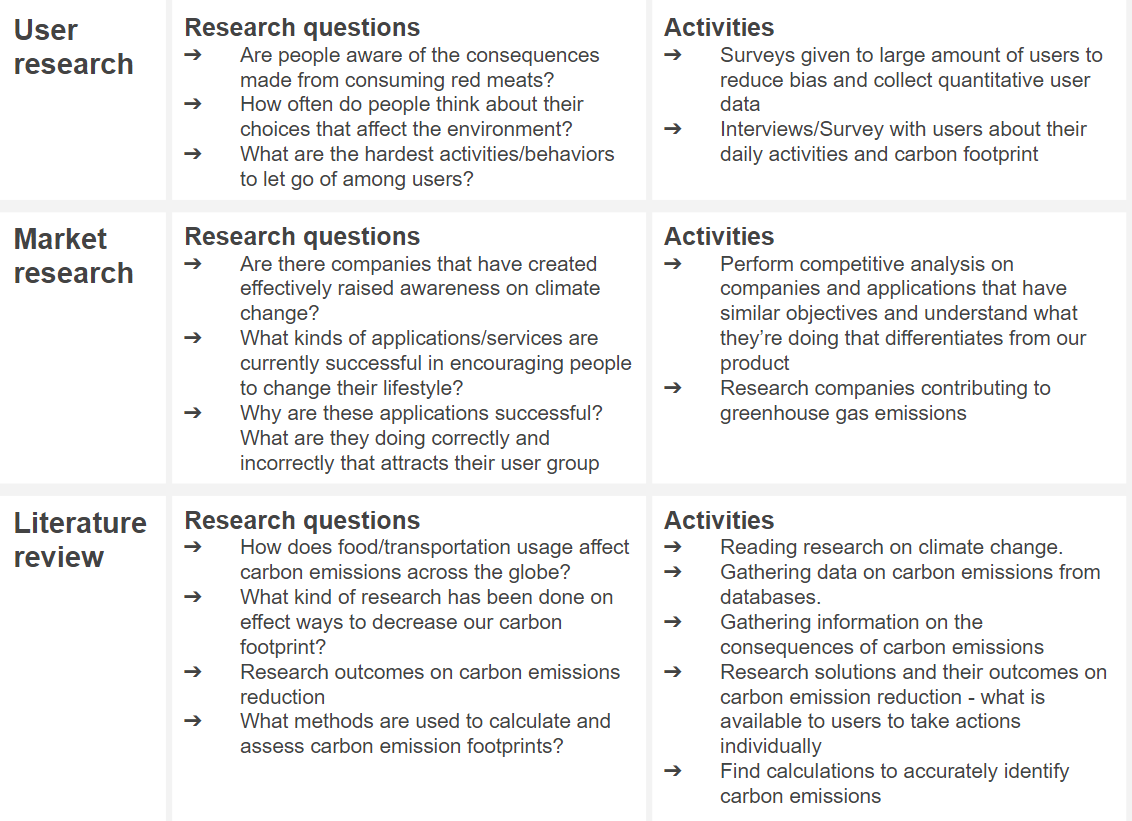
Research plan that lists the research questions and activities
Research Insights
Our research revealed several behavioral, market, and technical insights that shaped the direction of our project. These insights helped us understand user awareness, identify gaps in existing tools, and determine the feasibility of building an image‑recognition–based carbon‑footprint experience.
User Research
People think about the environment infrequently — on average, only twice per week.
Red meat consumption is common, averaging three times per week, despite its high carbon impact.
Most participants do not consider carbon emissions when choosing what to eat.
Users who care about sustainability lack accessible, real‑time information to guide everyday food decisions.
What this meant for our design: Users needed a solution that surfaces carbon‑impact information instantly and in a way that doesn’t require extra effort or prior knowledge.
Market Research
Existing food‑recognition apps (e.g., Bite AI, CalorieMama) demonstrate strong image‑recognition capabilities but do not provide carbon‑emission data.
Social platforms like Instagram could be potential partners due to their large volume of food‑related content.
No current tools combine food recognition + environmental impact, revealing a clear market gap.
What this meant for our design: There was an opportunity to differentiate by pairing food recognition with sustainability insights,something no competitor currently offered.
Literature Review
Utilizing a trained InceptionV3 convolutional neural network is one of the best image recognition networks at the moment and will serve as a good basis for our food recognition model
10–30% of a U.S. household’s carbon emissions come from food consumption.
The average U.S. household spends $6,000 annually on food, highlighting the scale of potential impact.
What this meant for our design: We needed to translate complex environmental data into simple, intuitive visualizations that help users understand the impact of everyday foods.
Our Solution

Personas
To guide our design decisions and ensure we were addressing real user needs, we created three personas representing individuals who care about the environment but lack a deep understanding of how their food choices contribute to climate change. These personas helped us stay focused on user motivations, behaviors, and pain points as we mapped out the product experience.


User Journey Map
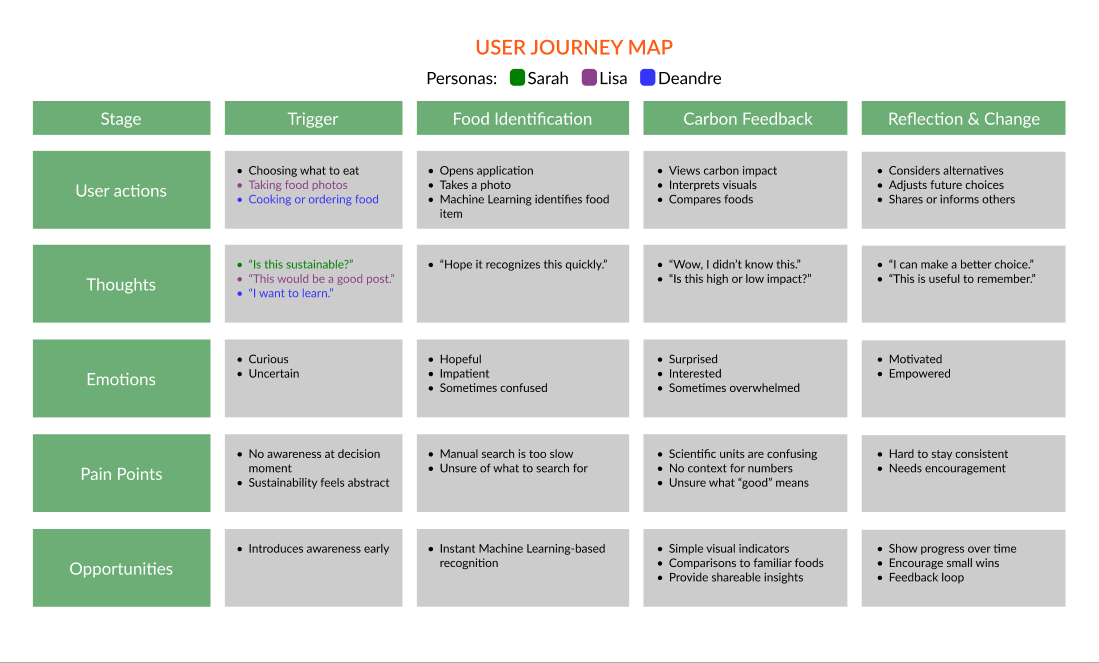
This journey map illustrates how each persona moves from choosing food to becoming aware of its environmental impact. It highlights their motivations, pain points, and opportunities for Greenergy to support their goals.
Low-Fidelity Prototype
We created a low‑fidelity prototype based on our conducted research to establish a clear and intuitive structure for the Greenergy interface. At this stage, our goal was not to focus on visuals, branding, or color, but to define the layout, information hierarchy, and core user flows. By keeping the wireframes simple, we were able to iterate quickly and ensure that the experience was easy to understand before investing time in high‑fidelity design.

Design System

After establishing the structure through low‑fidelity wireframes, our next step was to define the visual direction for Greenergy. We focused on selecting colors, typography, and UI components that aligned with our theme of environmental awareness and carbon‑impact education.
We decided to use colors that went with a theme that spoke sustainability, reduction, and environmental clarity.
For typography, we selected simple typefaces to maintain readability and ensure that the carbon‑impact information remained the focal point. The goal was to create a clean, modern aesthetic that supports accessibility.
We put in other components, such as images, assets, buttons, and icons to build our “moodboard” to build a general feel of how the product should look.
High-Fidelity Prototype
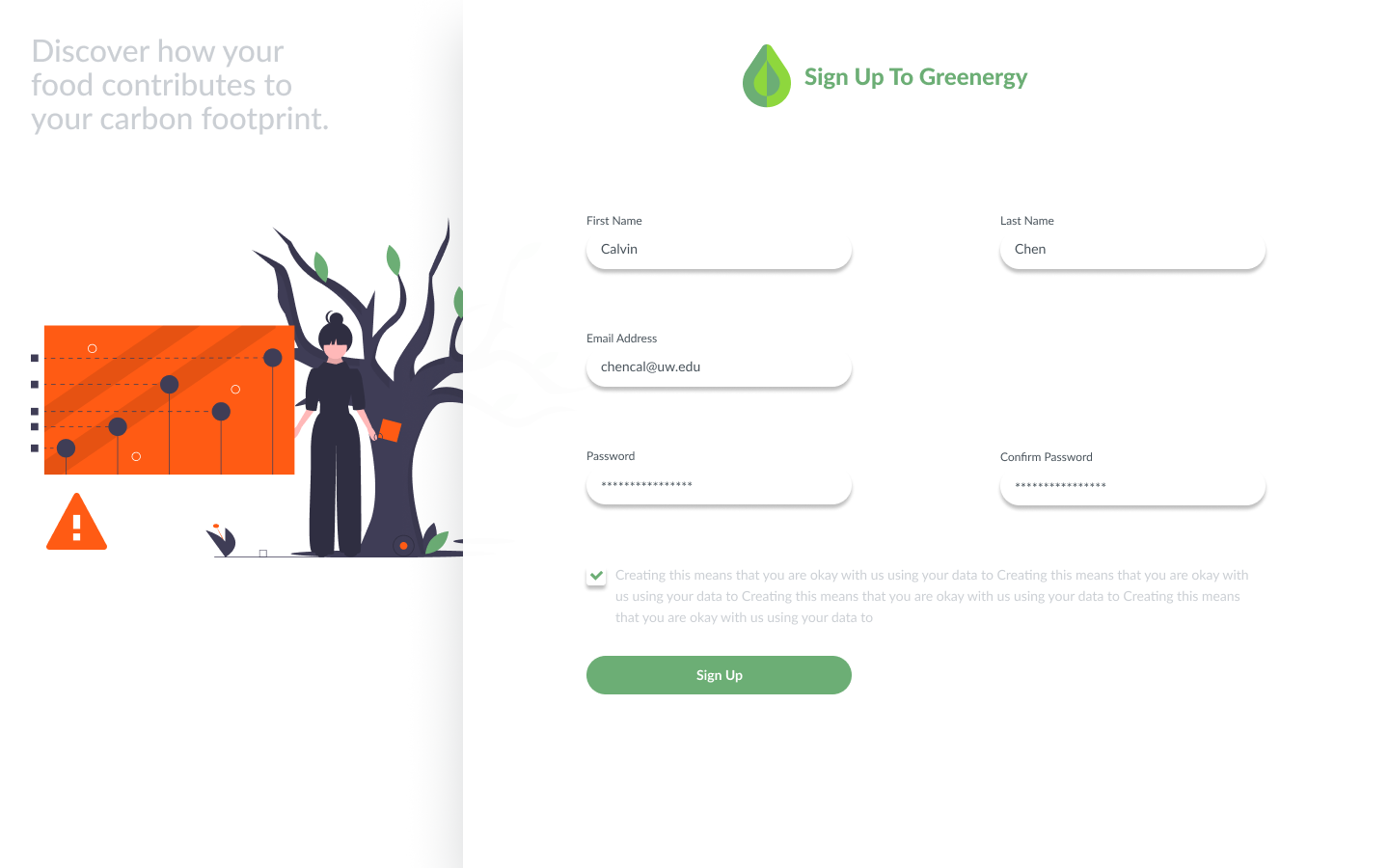
With our visual direction established, we moved into creating the high‑fidelity prototype. This stage focused on bringing together our finalized color palette, typography, imagery, and UI components to create a cohesive and realistic representation of the Greenergy experience.




Impact
Through this project, we created a solution that helps users understand the environmental impact of their food choices in a simple, accessible way. By combining machine learning–based food recognition with intuitive carbon‑impact visualizations, Greenergy makes sustainability information available at the exact moment users need it.
Our usability testing showed that:
Users became more aware of how everyday foods contribute to carbon emissions
Visual indicators and comparisons helped users interpret complex data quickly
Participants felt more motivated to make lower‑impact choices over time
The app encouraged reflection without guilt, supporting positive behavior change
~15% reduction of carbon footprint in users
Overall, Greenergy demonstrated how thoughtful design can make sustainability education more approachable and actionable.
Reflection
Our team set out with a simple but ambitious goal: to create something that could make a meaningful, positive impact on the world. By designing a tool that helps people understand how their food choices affect their carbon footprint, we created an experience that is both innovative and educational. If users become more aware of the environmental impact of what they eat, they may feel empowered to make small lifestyle changes that contribute to a healthier future. Greenergy was built to support that feedback loop by helping users learn, reflect, and reduce their carbon impact over time.
Working on this project also reinforced the importance of strong collaboration. I had worked with several teammates before, so I expected that we would communicate well and produce something we were proud of. Those expectations were met. Despite the challenges of Covid‑19, which prevented us from meeting in person, we adapted quickly. We held frequent online meetings, kept each other accountable, and supported one another through each stage of the process. This experience reminded me how essential communication, flexibility, and shared ownership are in creating a successful product.
Overall, this project strengthened my ability to design with purpose, collaborate effectively, and adapt to unexpected constraints — all while working toward a solution that encourages positive environmental change.
Continuation & Improvements
While Greenergy successfully introduces users to the carbon impact of their food choices, there are several opportunities to expand the product and deepen its long‑term value.
1. Expand and diversify the food database
To improve accuracy and relevance, I would integrate a broader dataset that includes:
More global and culturally diverse foods
Packaged items using barcode or nutrition‑label scanning
Regional variations in carbon impact
A richer dataset would make Greenergy more useful in everyday decision‑making.
2. Improve machine‑learning performance
As more users interact with the system, the model could be retrained to:
Better recognize mixed dishes and complex meals
Reduce misclassifications
Improve speed and confidence scoring
This would create a smoother, more reliable experience.
3. Introduce personalized insights and goals
To support long‑term behavior change, I would explore features such as:
Weekly summaries of carbon savings
Personalized recommendations based on eating patterns
Optional goals like “Reduce your footprint by 10% this month”
These features would help users stay engaged and see their progress over time.
4. Explore real‑world integrations
Partnerships could extend Greenergy beyond the app, allowing users to:
Scan grocery items or menus
Discover sustainable restaurants
View carbon‑impact labels in real time
This would bring sustainability awareness directly into users’ daily routines.
5. Add community and social features
For users like Lisa, social influence is a powerful motivator. Future iterations could include:
Sharing sustainable meals
Gamification of milestones (badges)
Participating in challenges or community goals
This could amplify impact and increase engagement.